
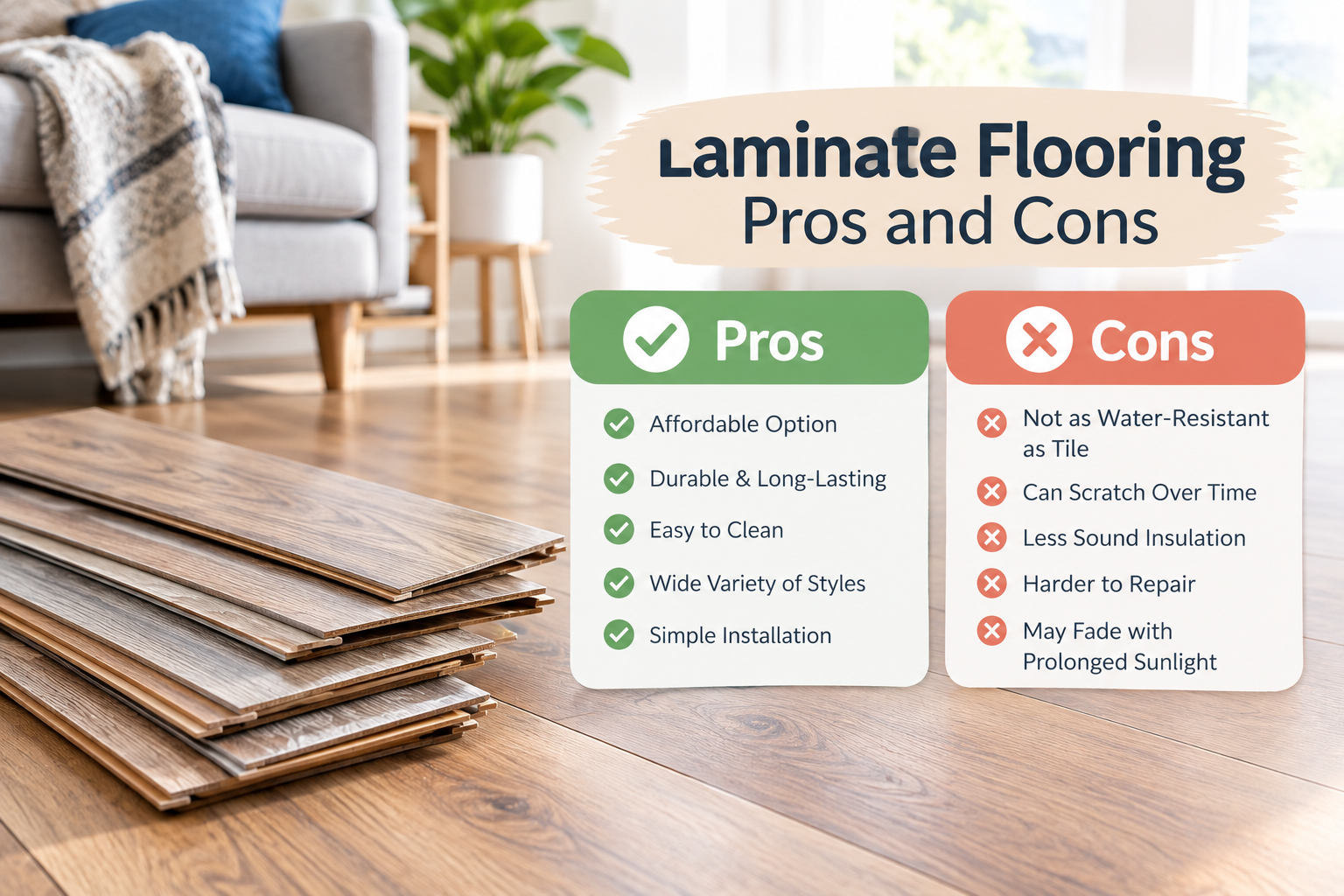
Walk into any flooring showroom in Texas these days, and laminate is usually one of the first displays you’ll bump into. It’s affordable, it looks surprisingly close to real wood, and contractors talk it up as the practical choice for busy households. But is it actually the right call for your home, or just the option that photographs well in a showroom? Understanding the real laminate flooring pros and cons before committing can save you from a renovation regret that’s expensive to undo.
Let’s get into what this flooring actually delivers and where it falls short.
What Laminate Flooring Actually Is
Laminate flooring is a multi-layer synthetic product, typically made from a high-density fiberboard core topped with a photographic layer that mimics wood, stone, or tile, then sealed with a protective wear layer. It’s not real wood, but modern versions have gotten remarkably convincing.
A homeowner in San Antonio recently replaced worn carpet in her living room with laminate designed to look like white oak. Visitors regularly assume it’s real hardwood until she mentions otherwise a small but telling example of how far the technology has come.
The Pros: Why So Many Texas Homeowners Choose It
Affordability. This is usually the deciding factor. Laminate flooring installation generally costs significantly less than solid hardwood, both in material and labor. For a family renovating a 1,500 square foot home in Fort Worth on a tight budget, laminate let them cover their entire downstairs for roughly what hardwood would’ve cost for just two rooms.
Durability against scratches. The wear layer on laminate resists scratches better than many people expect, which matters a lot in homes with pets or kids. A family in Austin with two large dogs switched from engineered hardwood to laminate specifically because their previous floors showed claw marks within months the laminate has held up noticeably better after roughly a year, according to what they mentioned to their installer.
Easy maintenance. No refinishing, no special oil treatments, no worrying about water rings from a forgotten glass. Regular sweeping and occasional damp mopping generally keeps it looking presentable.
Quick installation. Laminate flooring installation is typically faster than solid hardwood since many products use a click-lock system that doesn’t require nails or extensive adhesive work. A flooring crew in Houston completed a 900 square foot laminate installation in a day and a half a timeline that would likely stretch several days longer with traditional hardwood.
Consistency in appearance. Because it’s manufactured, laminate offers uniform color and pattern across an entire floor, without the natural variation that some homeowners find unpredictable in real wood.
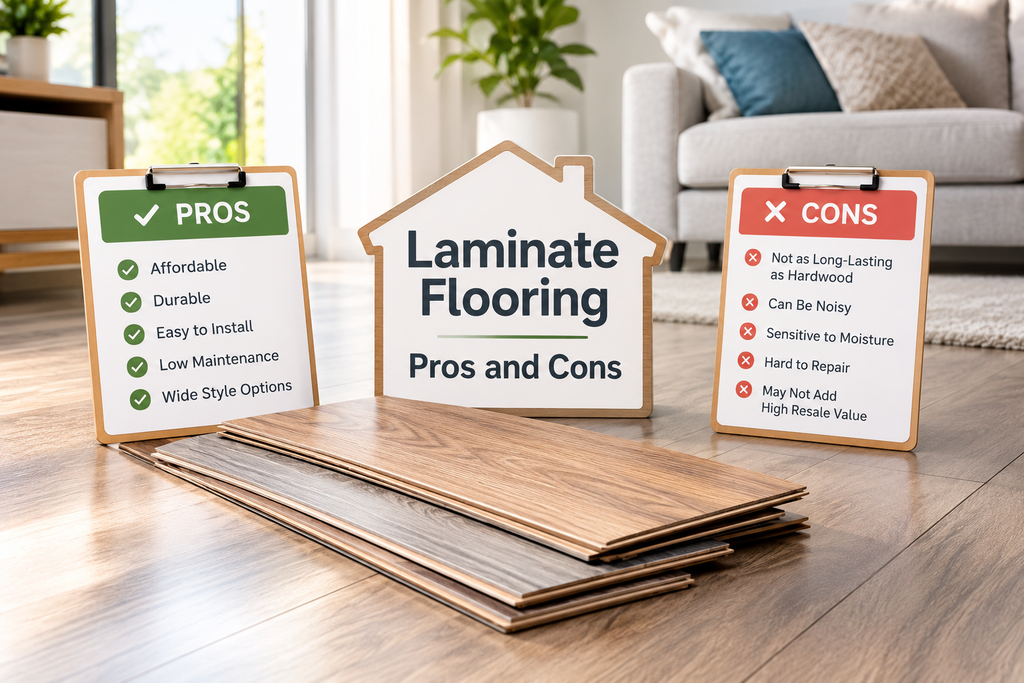
The Cons: Where Laminate Falls Short
Moisture vulnerability. This is probably the biggest drawback, and it matters more in Texas than people initially realize given humidity swings between seasons. Standard laminate isn’t fully waterproof prolonged exposure to moisture can cause the core to swell or warp. A homeowner in Houston learned this the hard way after a slow leak under a refrigerator went unnoticed for weeks, warping several planks that needed replacing.
Can’t be refinished. Unlike hardwood, which can be sanded and refinished multiple times over decades, laminate’s printed layer means once it’s damaged or worn through, that section needs replacing entirely rather than restoring.
Doesn’t add the same resale value. Real estate agents in Texas often note that solid Hardwood Flooring tends to appeal more to buyers and can support higher asking prices compared to laminate, particularly in higher-end neighborhoods. This isn’t universal it varies by market and price point but it’s worth considering if resale value factors into your renovation decision.
Sound and feel. Some homeowners notice a slightly hollow sound underfoot compared to solid wood, especially with certain underlayment choices. It’s a minor issue for most people, but worth experiencing in person before committing to an entire home’s worth.
Not ideal for every room. Bathrooms and areas prone to standing water usually aren’t great candidates for standard laminate, which is why many contractors steer homeowners toward Vinyl Flooring instead for those specific spaces.
Laminate vs. Other Flooring Options
This is where it helps to zoom out a bit, since laminate isn’t competing in a vacuum.
- Laminate vs. Hardwood Flooring: Hardwood costs more but offers better resale value and can be refinished over time; laminate is cheaper and more scratch-resistant but can’t be restored once damaged.
- Laminate vs. Vinyl Flooring: Vinyl handles moisture significantly better, making it a stronger choice for bathrooms and laundry rooms, while laminate often has a more authentic wood-like texture and appearance.
- Laminate vs. Carpet Flooring: Carpet Flooring feels warmer underfoot and works well in bedrooms, but laminate is far easier to clean and doesn’t trap allergens the way carpet fibers can.
A couple in Dallas ended up mixing flooring types throughout their home laminate in the living room and hallways, Vinyl Flooring in the bathrooms, and Carpet Flooring in the bedrooms. That kind of room-by-room approach is increasingly common since no single flooring type perfectly suits every space in a house.
Cost Breakdown for Texas Homeowners
Pricing varies based on product quality, square footage, and labor rates across different Texas cities, so treat these as general ranges rather than fixed numbers.
- Material cost: Roughly $1 to $5 per square foot depending on quality and brand.
- Professional Floor installation: Typically adds $2 to $8 per square foot depending on subfloor condition and regional labor rates.
- Total installed cost: Most homeowners land somewhere between $3 and $13 per square foot when everything’s factored in.
These figures shift often enough with material costs and contractor availability that it’s genuinely worth getting a few local quotes before budgeting your renovation around any specific number.
When Laminate Makes Sense And When It Doesn’t
Laminate tends to work well for living rooms, hallways, home offices, and bedrooms where moisture exposure is minimal. It’s a solid pick for rental properties too, since it handles wear reasonably well without the cost of hardwood.
Where it doesn’t make as much sense: bathrooms, laundry rooms, or basements prone to occasional flooding. For those spaces, Vinyl Flooring or tile generally holds up better against consistent moisture exposure.
If you’re mid-renovation and also tackling other projects say, Kitchen Remodeling or Shower Remodeling it’s worth coordinating flooring choices across the whole project. A contractor in El Paso mentioned that homeowners often choose laminate for open-concept living areas while opting for tile or Vinyl Flooring in adjacent kitchen and bathroom spaces specifically because of the moisture difference between rooms.
Installation Considerations Worth Knowing
Laminate flooring installation isn’t necessarily a simple DIY weekend project, despite how it’s sometimes marketed. Subfloor preparation matters significantly uneven subfloors can cause clicking sounds, gaps, or premature wear at the seams.
A homeowner in Plano attempted a DIY laminate installation without properly leveling an older subfloor first. Within months, several seams started separating, requiring a professional to come back and redo sections of the work. Professional Floor installation typically includes subfloor assessment as a standard part of the process, which tends to prevent exactly this kind of issue.
Making the Final Decision
There’s no universally “right” answer here it depends on your household, your budget, and how each room in your home actually gets used. A young family prioritizing durability and budget might lean toward laminate throughout most of the house. A homeowner focused on maximizing resale value in a higher-end Texas neighborhood might lean toward hardwood in main living areas instead, saving laminate for lower-traffic secondary spaces.
Wrapping Things Up
Laminate flooring isn’t a flawless solution, but it’s also not the compromise choice some homeowners assume it to be. For Texas households balancing budget, durability, and style, it often lands in a genuinely practical middle ground assuming you’re realistic about where moisture exposure could become a problem. The best approach is usually walking through your own home room by room, being honest about how each space actually gets used, before deciding where laminate fits and where another flooring type might serve you better.
FAQs
1. Is laminate flooring a good choice for Texas homes?
Yes, for most living spaces laminate holds up well against Texas heat and daily wear, though it’s not recommended for bathrooms or areas with frequent moisture exposure.
2. How long does laminate flooring installation typically take?
Most residential laminate installations take one to three days depending on square footage and subfloor condition, though larger homes may take longer.
3. Can laminate flooring get wet without being damaged?
Standard laminate isn’t fully waterproof, and prolonged moisture exposure can cause warping, though some newer water-resistant laminate products offer better protection worth confirming with your specific product’s specifications.
4. Does laminate flooring increase home resale value like hardwood does?
Generally, hardwood tends to appeal more to buyers and may support higher resale value in certain markets, though laminate’s affordability and appearance can still positively impact a home’s overall presentation.
5. What’s the main difference between laminate and vinyl flooring?
Vinyl Flooring handles moisture significantly better, making it ideal for bathrooms and laundry rooms, while laminate often provides a more realistic wood-like texture and appearance for living spaces.